- Space
- Astronomy
The bright binary star system V Sagittae will flare up multiple times before finally going supernova within the next 100 years. When it explodes, it could be visible to the naked eye even in sunlit skies.
0 Comments Join the conversationWhen you purchase through links on our site, we may earn an affiliate commission. Here’s how it works.
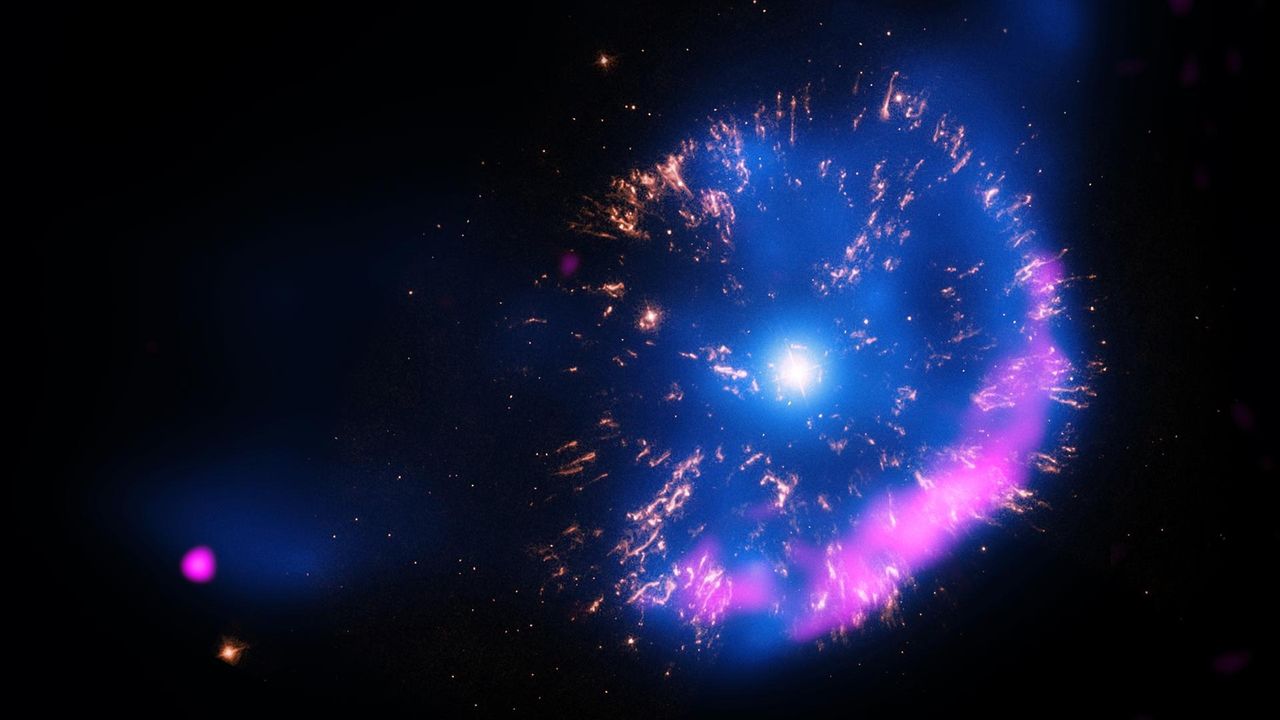
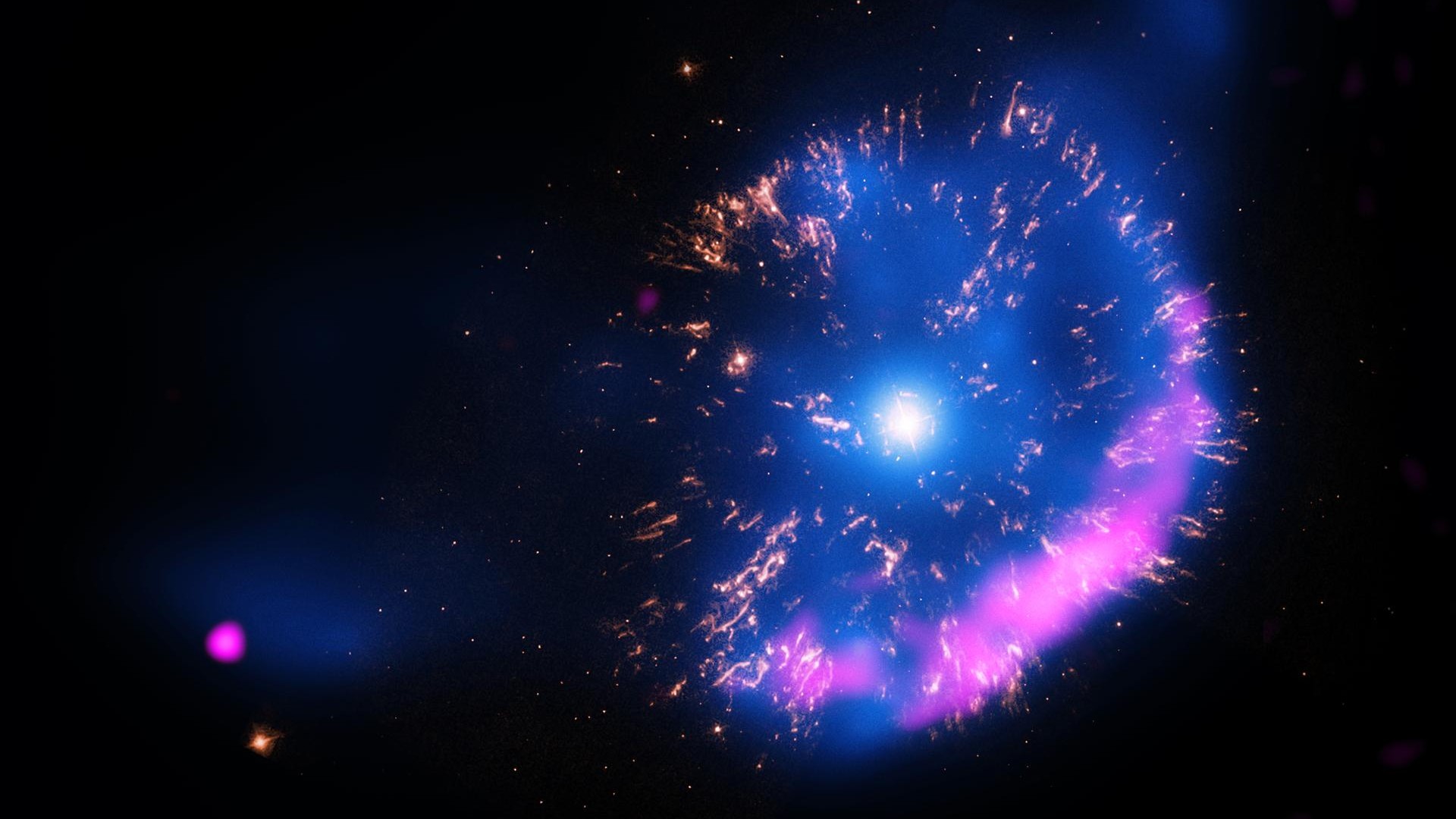 The star system GK Persei, home of an infamous nova explosion, seen by the Chandra X-ray telescope. An even brighter nova is due to erupt from V Sagittae in the next century.
(Image credit: NASA Goddard)
The star system GK Persei, home of an infamous nova explosion, seen by the Chandra X-ray telescope. An even brighter nova is due to erupt from V Sagittae in the next century.
(Image credit: NASA Goddard)
An incredibly luminous star system that has long baffled astronomers could soon light up the sky with the nuclear brilliance of thousands of suns, new research suggests. When that happens, the results may be visible from Earth with the naked eye — in day or night.
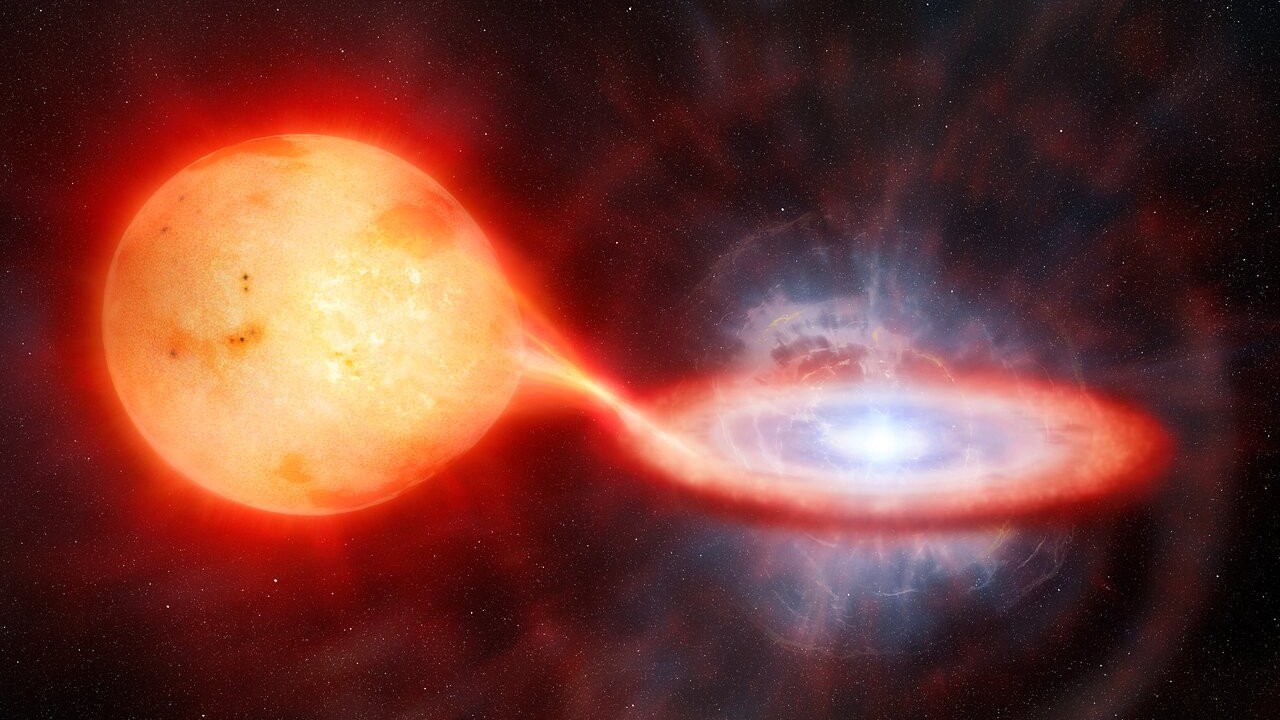
The star system, called V Sagittae, is composed of a white dwarf — the dense core of a dead, sun-like star — and a more-massive stellar companion, located about 10,000 light-years away, in the constellation Sagitta, the arrow. The voracious white dwarf is gorging on material from its companion "at a rate never seen before," the team said in a statement.
You may like-
 Two stars spiraling toward catastrophe are putting Einstein's gravity to the test
-
 Hidden 'doomed' star revealed by James Webb Space Telescope could solve decades-old mystery
-
 Scientists map the shape of a supernova for the first time ever: Space photo of the week
"The matter accumulating on the white dwarf is likely to produce a nova outburst in the coming years, during which V Sagittae would become visible with the naked eye," Pablo Rodríguez-Gil, a professor at the Institute of Astrophysics of the Canary Islands in Spain and co-author of the study, said in a statement.
Understanding the beast
In a study published in November in the journal Monthly Notices of the Royal Astronomical Society, an international research team led by the University of Turku in Finland analyzed the light emitted by V Sagittae to better understand exactly what type of beast it may be.
These data were gathered over a 120-day observation period by the X-Shooter spectrograph at the European Southern Observatory's Very Large Telescope, situated at an altitude of 8,600 feet (2,600 meters) atop Cerro Paranal in Chile's Atacama Desert.
Spectrographs like X-Shooter collect incoming light from celestial objects and then separate that light into its constituent wavelengths. This provides a spectrum that reveals the object's chemical composition, since each atom and molecule absorbs and reflects a certain wavelength of light. For perspective, think of how a prism splits white light into its constituent colors to produce a rainbow.
Sign up for the Live Science daily newsletter nowContact me with news and offers from other Future brandsReceive email from us on behalf of our trusted partners or sponsorsBy submitting your information you agree to the Terms & Conditions and Privacy Policy and are aged 16 or over.This spectral data helped the researchers re-analyze V Sagittae's characteristics. Previously, in a study from 1965, astronomers calculated that its two stars were 0.7 and 2.8 solar masses, though this is a controversial conclusion.
To constrain stellar sizes, this more recent study considered factors like orbital period to suggest that the entire system may be below 2.1 solar masses, with both the white dwarf and its companion each weighing in at around 1 solar mass.
Phil Charles, a professor emeritus of astronomy at the University of Southampton and co-author of the study, described the confusion surrounding this "very important system." The uncertainty stems from V Sagittae's complicated, constantly fluctuating light emissions, which are "more likely due to fast outflows" rather than the stars' orbital motions, making it hard to pin down their sizes.
You may like-
Two stars spiraling toward catastrophe are putting Einstein's gravity to the test
-
Hidden 'doomed' star revealed by James Webb Space Telescope could solve decades-old mystery
-
Scientists map the shape of a supernova for the first time ever: Space photo of the week
"From our study we show that no one has yet been able to uniquely identify the orbital motion of each component, and hence we don't yet have a good measure of each star's mass." Charles told Live Science via email.
An orbiting nuke
The researchers also identified V Sagittae as a supersoft X-ray source (SSS), meaning it generates lower-energy X-rays compared with hard sources like active black holes and colliding neutron stars. Classical SSS are composed of an accreting white dwarf and a more massive star whose gas is overspilling and falling onto the white dwarf.
V Sagittae's prodigious gravitational appetite is causing a sustained thermonuclear reaction on the white dwarf's surface, turning it into an orbiting nuke and the brightest SSS in the galaxy, researchers said in a statement.
In fact, even during its fainter phases V Sagittae is 100 times brighter than other variable star systems. The speed of the infalling material in the white dwarf's accretion disk shifts dramatically and unpredictably, sometimes in just days, as it struggles to consume all the material it pilfers from its partner, the team said in a separate statement.
As a result, a significant amount of material has escaped and formed a ring, or halo, of gas that encircles both stars, composing a "circumbinary disk" with a radius that may span about two to four times the separation between the two stars.
A daytime supernova
V Saggitae's chaotic accretion and extreme brightness are signs of its imminent, violent death, which will be prefaced by an explosive appetizer, as it were, offering a promising scenario for hopeful stargazers: a nova explosion.
Novae occur when an accreting white dwarf engulfs too much material and then explosively ejects it from their surface. These stellar explosions do not destroy their white dwarfs but are nonetheless stunning, with the average nova shining hundreds of thousands of times as brightly as the sun. Since they do not destroy their white dwarfs, these novae can reoccur across thousands or millions of years.
related stories—1st supernovas may have flooded the early universe with water — making life possible just 100 million years after the Big Bang
—'We had less than a 2% chance to find this': James Webb telescope uncovers baffling 'Big Wheel', one of the most massive galaxies in the early universe
—Did a supernova 6 million years ago kickstart evolution in Africa? New study offers a clue
Yet this spectacular sight will only be a prelude to the main event. When the stars spiral into each other and smash together, they'll produce a "supernova explosion so bright it'll be visible from Earth even in the daytime," adds Rodríguez-Gil.
This ultimately brilliant finale may occur as early as 2067, according to a 2020 study from Louisiana State University, which predicted V Saggitae's demise based on the decreasing orbital period of its stars. Charles concludes that if the "[observed] period decline continues then it must happen, but stellar evolution is hard to predict exactly, so that might easily change!"
So keep an eye tuned toward Sagitta for a nova and mark your calendars for the supernova that will spectacularly spell the end of one of our galaxy's most tantalizing star systems.
Ivan FarkasLive Science ContributorIvan is a long-time writer who loves learning about technology, history, culture, and just about every major “ology” from “anthro” to “zoo.” Ivan also dabbles in internet comedy, marketing materials, and industry insight articles. An exercise science major, when Ivan isn’t staring at a book or screen he’s probably out in nature or lifting progressively heftier things off the ground. Ivan was born in sunny Romania and now resides in even-sunnier California.
You must confirm your public display name before commenting
Please logout and then login again, you will then be prompted to enter your display name.
Logout Read more Two stars spiraling toward catastrophe are putting Einstein's gravity to the test
 Hidden 'doomed' star revealed by James Webb Space Telescope could solve decades-old mystery
 Scientists map the shape of a supernova for the first time ever: Space photo of the week
 'Unlike any we've ever seen': Record-breaking black hole eruption is brighter than 10 trillion suns
 NASA spacecraft reveal interstellar comet 3I/ATLAS brightened rapidly as it swooped behind the sun
 There's a 90% chance we'll see a black hole explode within a decade, physicists say
Latest in Astronomy
There's a 90% chance we'll see a black hole explode within a decade, physicists say
Latest in Astronomy
 How to find the 'Christmas Star' — and what it really is
 New 3I/ATLAS images show the comet getting active ahead of close encounter with Earth
 Ethereal structure in the sky rivals 'Pillars of Creation' — Space photo of the week
 Strangely bleached rocks on Mars hint that the Red Planet was once a tropical oasis
 Giant sunspot on par with the one that birthed the Carrington Event has appeared on the sun — and it's pointed right at Earth
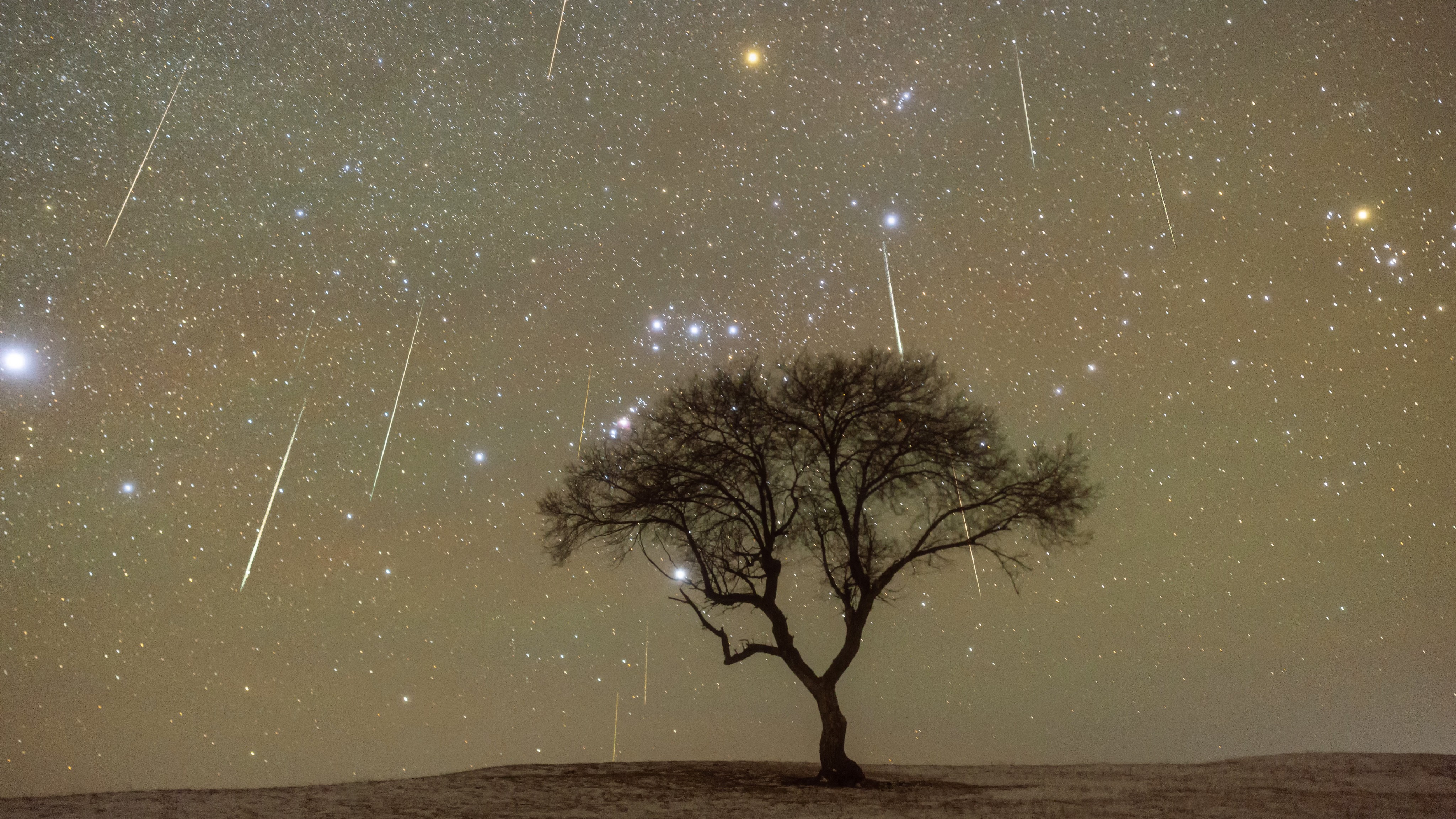 Geminids 2025: The year's best meteor shower peaks this week, with a second shower hot on its tail
Latest in News
This bright star will soon die in a nuclear explosion — and could be visible in Earth's daytime skies
Geminids 2025: The year's best meteor shower peaks this week, with a second shower hot on its tail
Latest in News
This bright star will soon die in a nuclear explosion — and could be visible in Earth's daytime skies
 The Arab region — a swath from Morocco to the United Arab Emirates — just had its hottest year on record
 Gray hair may have evolved as a protection against cancer, study hints
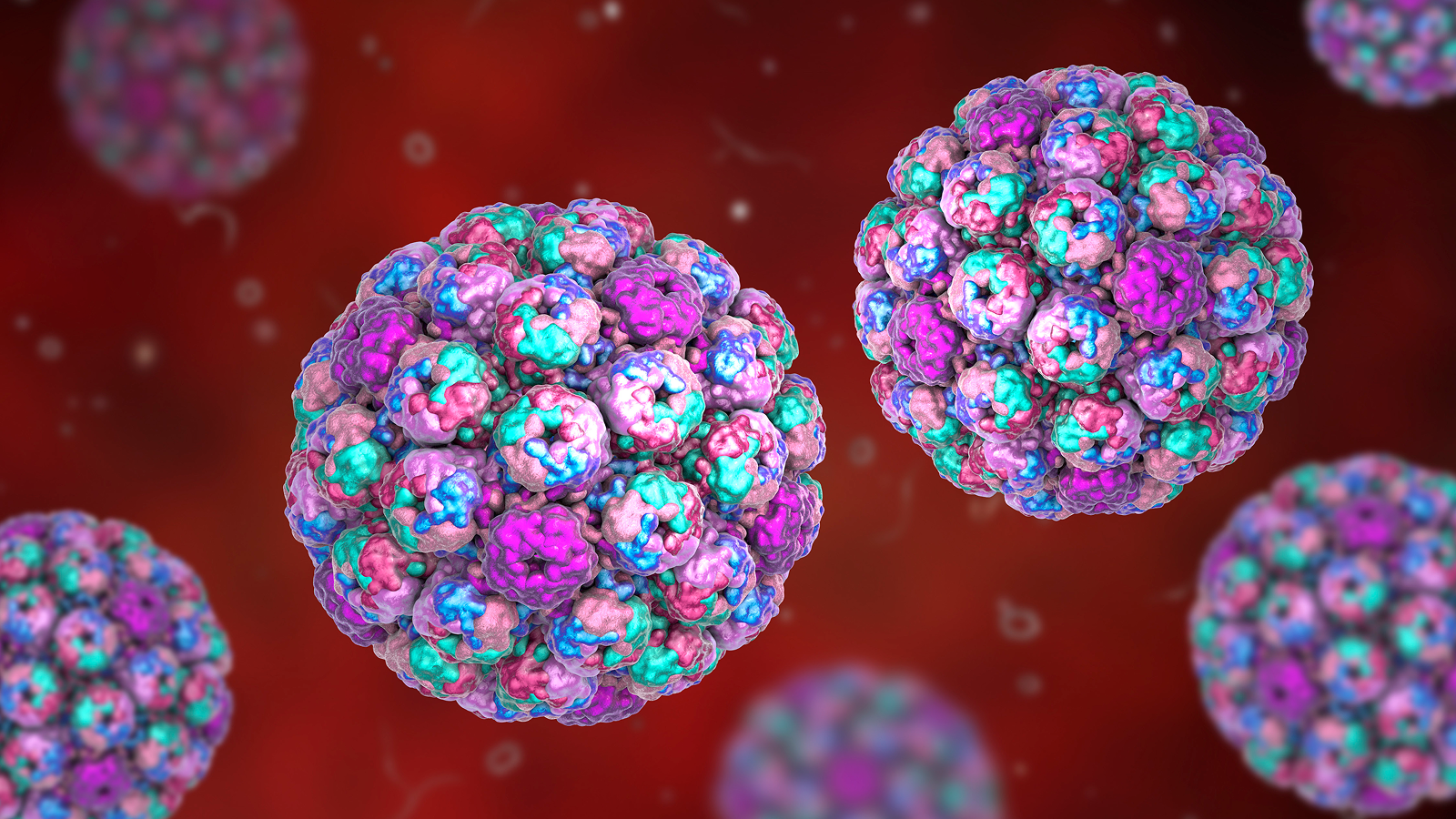 Widespread cold virus you've never heard of may play key role in bladder cancer
 Glue strong enough to tow a car made from used cooking oil
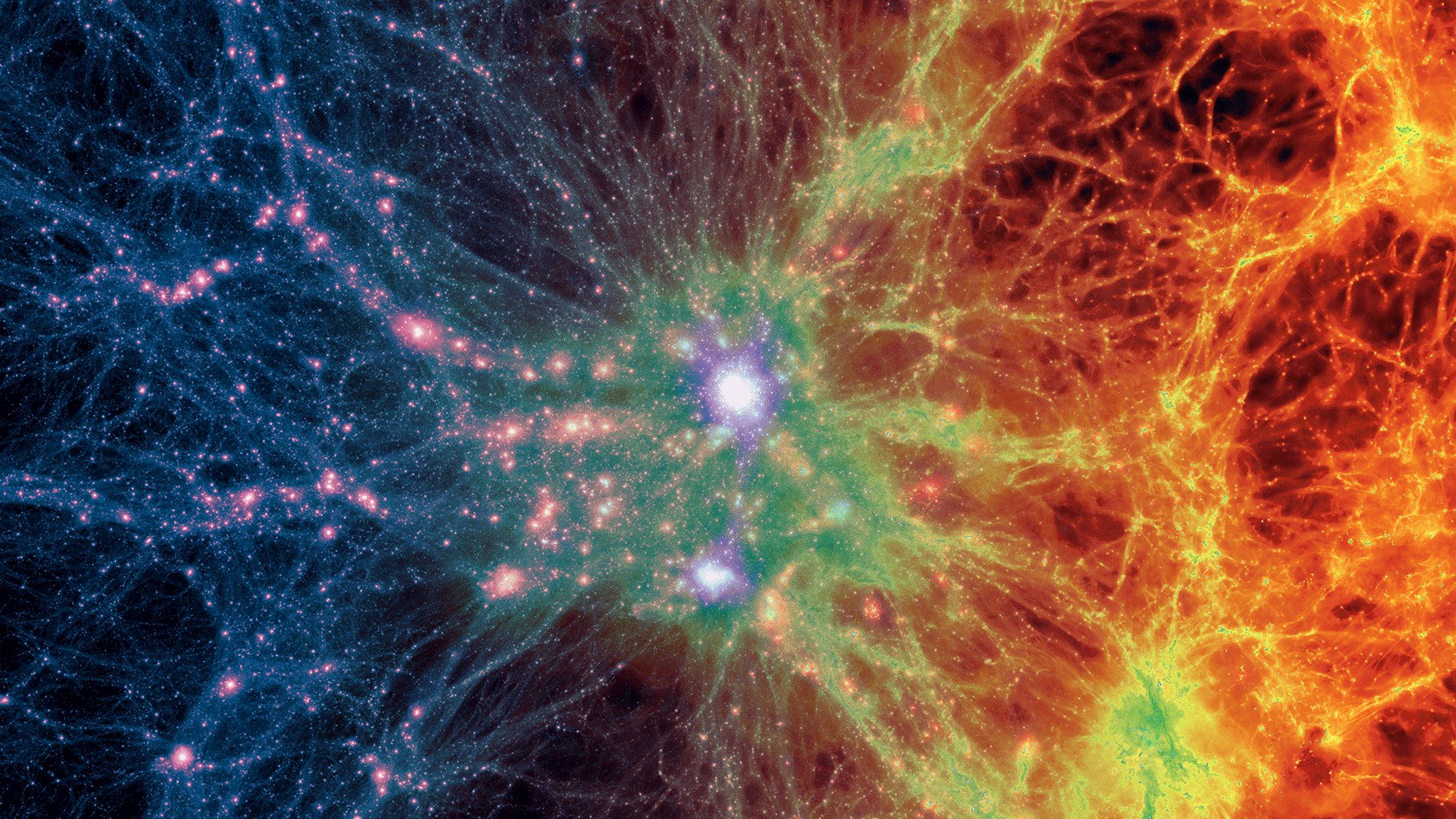 Historic search for 'huge missing piece' of the universe turns up negative — but reveals new secrets of particle physics
LATEST ARTICLES
Historic search for 'huge missing piece' of the universe turns up negative — but reveals new secrets of particle physics
LATEST ARTICLES- 1The Arab region — a swath from Morocco to the United Arab Emirates — just had its hottest year on record
- 2Earth's crust hides enough 'gold' hydrogen to power the world for tens of thousands of years, emerging research suggests
- 3Widespread cold virus you've never heard of may play key role in bladder cancer
- 4Gray hair may have evolved as a protection against cancer, study hints
- 5Is the 'Star of Bethlehem' really a planet? A bright visitor this month may hold a clue.